Private Guided Tour of the Château de Fontainebleau
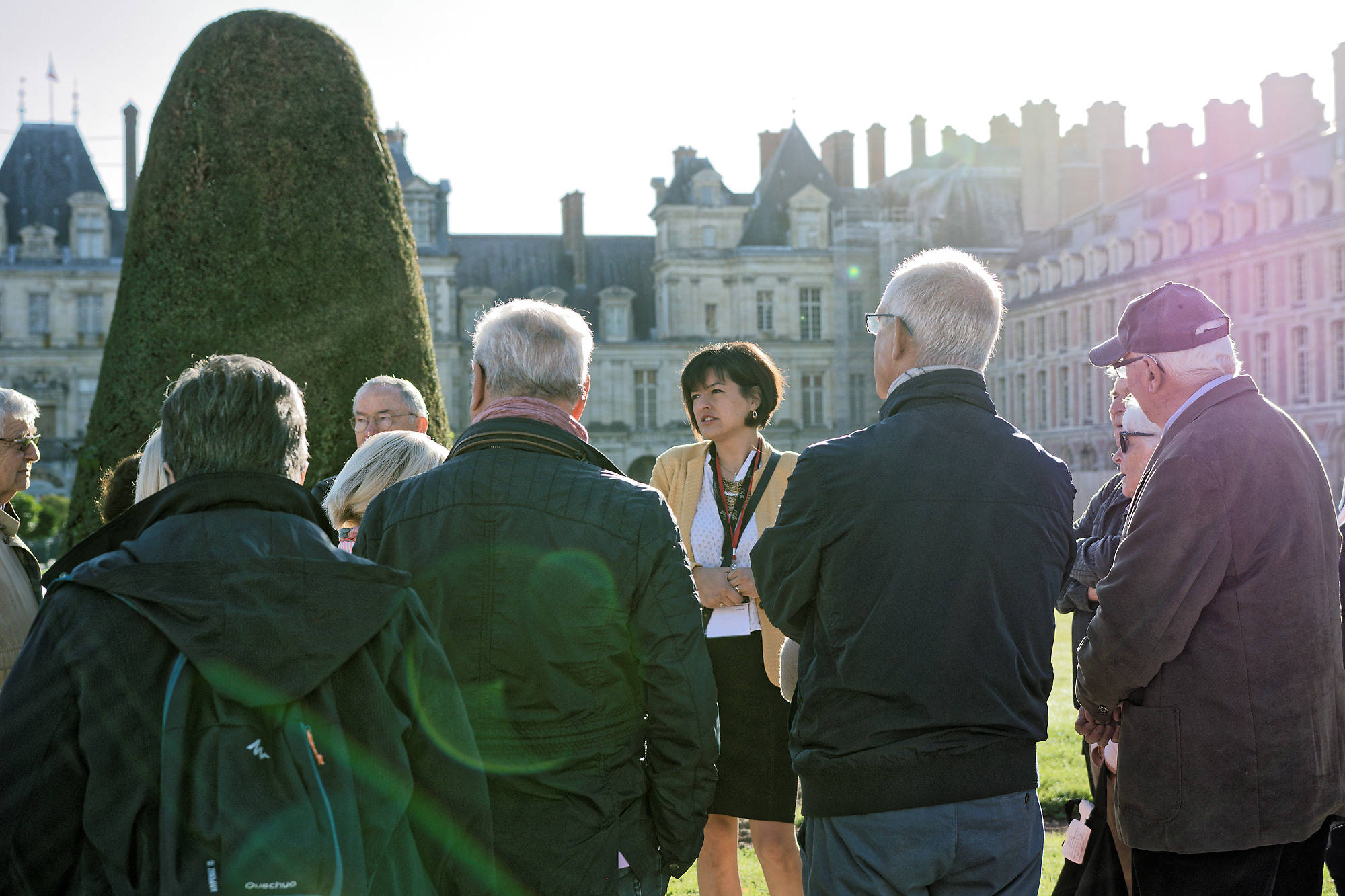
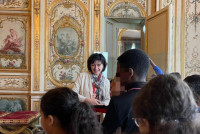
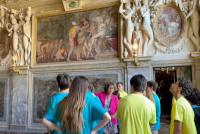
Nestled in the heart of an exceptional forest estate, the Château de Fontainebleau is one
of the greatest landmarks of French history. Inhabited continuously for more than eight
centuries, it served successively as a hunting residence, pleasure palace, political center
and intimate retreat for French sovereigns.
Located on the edge of the famous Fontainebleau Forest, just one hour from Paris, the
château offers an ideal setting for a private guided tour combining cultural immersion,
discovery and contemplation.
This exclusive experience is led by your licensed guide, offering a refined, lively and
insightful approach to one of France’s most remarkable royal residences.
Fontainebleau, cradle of the French Renaissance
The history of Fontainebleau dates back to the Middle Ages. From the 12th century onwards,
French kings stayed in this royal residence surrounded by vast hunting forests, making it
both a symbol of royal authority and French art de vivre.
According to legend, the name “Fontainebleau” comes from a spring called “Fontaine Belle
Eau” (“Beautiful Water Fountain”), renowned for the purity of its water.
However, it was under the reign of Francis I, beginning in 1527, that the château underwent
its greatest transformation. Inspired by Italian art and culture, the king turned the former
medieval fortress into a Renaissance palace modeled after the great Italian courts. He
invited renowned Italian artists to Fontainebleau, giving birth to the School of Fontainebleau
and establishing the château as the cradle of the French Renaissance.
A residence shaped by kings and emperors
Over the centuries, 34 kings and 2 emperors left their mark on Fontainebleau. Francis I,
Henry IV, Louis XIV, Marie-Antoinette, Napoleon I and Napoleon III all contributed to the
château’s extraordinary artistic and architectural richness through new apartments, gardens,
decorations and works of art.
The château witnessed lavish celebrations, royal births, diplomatic ceremonies and major
political decisions. It became successively:
- a hunting residence,
- a stage for court life,
- a family retreat,
- an imperial palace.
Under Napoleon I, Fontainebleau became one of the centers of imperial power. It was here
that he welcomed Pope Pius VII, hosted magnificent receptions and signed his famous
abdication in 1814 before delivering his emotional Farewell to the Old Guard in the Cour du Cheval-Blanc.
A private, immersive and tailor-made guided tour
This private guided tour includes:
- the royal and imperial apartments,
- the grand ceremonial rooms,
- the Gallery of Francis I,
- the apartments of Pope Pius VII,
- the Chapel of the Holy Trinity,
- the historic courtyards and gardens.
Throughout the visit, art history, royal etiquette, court life and the château’s architectural
evolution come alive through historical anecdotes, symbolism and fascinating stories.
Each tour can be tailored to your interests: French Renaissance, court life, women of
power, the Empire period, decorative arts, architecture or political history.
Practical information
- Private tour upon reservation
- Duration: 1.5 to 2 hours
- Tours available in French, English, Russian and Armenian
- Suitable for individuals, private groups and corporate events
Meeting point: Château gates, 77300 Fontainebleau
For bookings and information:
reservation@visite-guidee.com
+33 (0)6 42 33 77 10