Private Guided Tour of the Gardens of Vaux-le-Vicomte
.jpg "Vaux-le-Vicomte")
.jpg "Jardins de Vaux-le-Vicomte")
.jpg "Jardins de Vaux-le-Vicomte")
.jpg "Vaux-le-Vicomte")
.jpg "Jardins de Vaux-le-Vicomte")
.jpg "Jardins de Vaux-le-Vicomte")
.jpg "Jardins de Vaux-le-Vicomte")
.jpg "Vaux-le-Vicomte")
.jpg "Vaux-le-Vicomte")
.jpg "Vaux-le-Vicomte")
.jpg "Vaux-le-Vicomte")

.jpg "Vaux-le-Vicomte")

.jpg "Vaux-le-Vicomte")
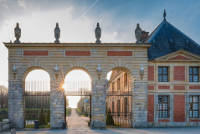
Crédit photos de Nathalie Demeire et Tessa Green
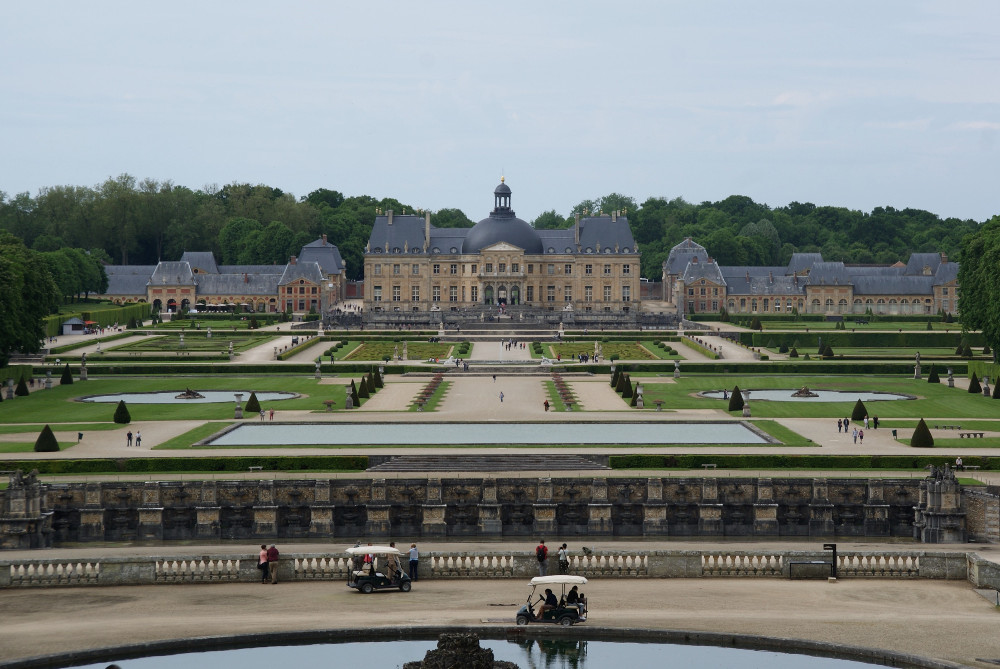
The gardens of Vaux-le-Vicomte are among the greatest masterpieces of French formal
garden design. Created by André Le Nôtre between 1658 and 1661 for Nicolas Fouquet,
Superintendent of Finances under Louis XIV, they mark the birth of a new landscape style
that would later inspire Versailles and royal gardens throughout Europe.
Designed as a grand theatrical composition of perspectives, light and optical illusions, the
gardens extend over 1,500 meters from the entrance gate to the statue of Hercules. From
the successive terraces, the château majestically dominates the landscape, symbolizing
both the political ambition and refined taste of Nicolas Fouquet.
Today, Vaux-le-Vicomte remains the largest privately owned listed estate in France, with 33
hectares of landscaped gardens and more than 500 hectares enclosed by walls.
André Le Nôtre and the birth of the French formal garden
The son and grandson of royal gardeners, André Le Nôtre revealed at Vaux-le-Vicomte the
full extent of his landscape genius. Working alongside architect Louis Le Vau and
painter-decorator Charles Le Brun, he created here his first major masterpiece.
In the 17th century, these “learned gardens,” also known as architectural gardens,
revolutionized European landscape design through their mastery of perspective, visual
effects and the artistic staging of nature.
Optical illusions, reflecting pools, trompe-l’œil effects, monumental axes and carefully
calculated viewpoints create a space where order, harmony and beauty become expressions
of power and classical French aesthetics.
From the statue of Hercules, visitors suddenly discover an entirely different view of the
château, which appears elevated upon a monumental succession of terraces.
The rebirth of the estate in the 19th century
After several decades of neglect during which nature reclaimed the estate, the gardens
experienced an extraordinary revival beginning in 1875 thanks to Alfred Sommier, ancestor
of the current owners.
His extensive restoration work made it possible to preserve and revive one of the finest
examples of 17th-century French landscape design.
A walk through the Grand Siècle
This private guided tour includes:
- Le Nôtre’s grand perspectives,
- fountains, terraces and water features,
- optical illusions and symbolic compositions,
- the relationship between architecture, landscape and political power,
- the artistic and cultural world of the Grand Siècle.
Throughout the walk, historical anecdotes and stories about figures such as Louis XIV,
Madame de Sévigné, La Fontaine, Molière and Pierre Corneille bring the estate to life.
This immersive experience reveals why Vaux-le-Vicomte remains the founding masterpiece
of the French formal garden tradition.
Practical information
- Private tours upon reservation
- Duration: 1.5 to 2 hours
- Tours available during château opening hours, including candlelit evenings and the Christmas season
- Tours available in French, English, Russian and Armenian
Meeting point:
Cour de l’Écureuil
Château de Vaux-le-Vicomte
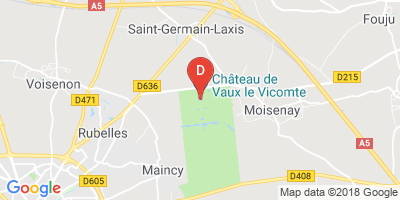
77950 Maincy
Bookings: reservation@visite-guidee.com
Additional information
- Online reservation through the château ticket office is mandatory
- Picnics are allowed in designated garden areas
- Free parking available on site
Access
From Paris:
The estate is located approximately 50 minutes from Paris, 20 minutes from Fontainebleau
and 5 minutes from Melun.
By public transportation:
Take the P train line from Paris Gare de l’Est to Verneuil-l’Étang, then the Châteaubus
shuttle to the château.